Knowledge
Practical technical notes for rubber & chemical sourcing, plus real-world playbooks for buying direct from Chinese factories — so overseas buyers know exactly what they are getting.
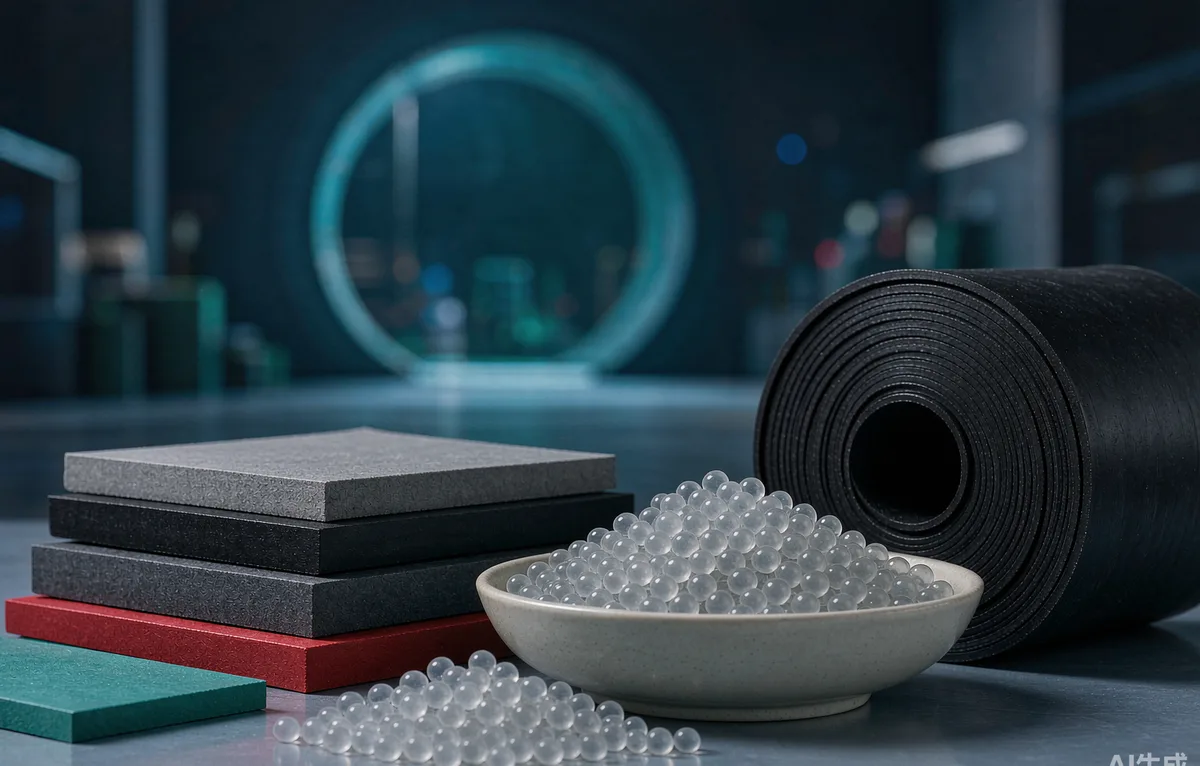
Industrial Rubber Sheet Buying Guide: Pick the Right Material by Duty
A side-by-side of NR, SBR, NBR, EPDM, CR, FKM and silicone with verified temperature and hardness ranges — so you pick by application, not by guess.
View →Sourcing from ChinaSourcing Rubber & Chemical Raw Materials from China: A Buyer's Guide
Why China is a global rubber hub, what clusters to know, and how to qualify a supplier safely.
View →Compliance & sustainabilityRubber Sourcing Compliance 2026: EUDR, REACH & What Buyers Must Check
The regulations now shaping rubber supply chains — and a practical checklist for overseas buyers.
View →TroubleshootingCommon Rubber Failures and How to Avoid Them
The five failures that sink rubber parts in the field — and the design choices that prevent each.
View →Testing & QCHow to Read a Rubber Test Report: Hardness, Tensile & Compression Set
The three numbers on every rubber datasheet, the standards behind them, and how to read them correctly.
View →Processing & curingHow Rubber Products Are Made: Mixing, Forming, Vulcanization & Finishing
The four stages every rubber part passes through, and the temperatures and tolerances that decide quality.
View →IngredientsRubber Compounding Ingredients Explained: Fillers, Cure Systems & Additives
What actually goes into a rubber compound beyond the base polymer — and why each ingredient exists.
View →Sourcing from ChinaMOQ, cartons and container loading: reading a wholesale quotation
A wholesale quotation is built from the unit price ladder, the MOQ, the carton quantity and the number of units that fit a 20 ft or 40 ft container.
View →Compliance & sustainabilityWhat to request with a quotation: COA, MSDS, TDS and test reports explained
A certificate of analysis reports the measured values for a specific batch.
View →Sourcing from ChinaCar care consumables: building a bulk purchase specification
Car care liquids are specified by formulation type, volume, packaging, closure and label artwork.
View →Sourcing from ChinaSolar garden lights: the B2B specification buyers actually compare
Solar lighting quotes are usually compared on ingress protection rating, battery and panel type, light output, colour temperature and run time, plus the carton and container quantity.
View →Sourcing from ChinaPet supplies for export: MOQ, packaging and private-label basics
Pet products are usually bought by carton or container with strong emphasis on packaging and custom branding.
View →Sourcing from ChinaExpansion anchor bolts: how to specify material, size and standard
Anchor bolts are specified by material grade, diameter, length and the standard they are manufactured to.
View →Sourcing from ChinaCompostable courier mailers: what to put in the purchase specification
Plant-based and PBAT blend films are used for e-commerce mailers as an alternative to conventional plastic.
View →Sourcing from ChinaCPLA vs PLA cutlery: choosing the right grade for hot meals
Standard PLA cutlery suits cold food and drinks but softens with heat.
View →Sourcing from ChinaSourcing moulded bagasse tableware: the specification checklist
Bagasse tableware is moulded from sugarcane fibre, a by-product of sugar refining, and is widely exported as an alternative to plastic and foam foodservice packaging.
View →Compliance & sustainabilityEnvironmental claims on packaging: the 2026 red lines for exporters
Generic environmental claims without specific, verifiable evidence are the explicit target of the EU rules applying from 27 September 2026, and unqualified degradability claims are treated as deceptive under the US FTC Green Guides.
View →Compliance & sustainabilityIndustrial composting vs home composting: why the distinction changes your packaging spec
Most certified compostable packaging is certified for industrial facilities, where piles are held at sustained high temperatures.
View →Compliance & sustainabilityEN 13432 vs ASTM D6400: what to ask a supplier before ordering compostable packaging
Compostability claims are only useful to a buyer if the documentation behind them matches the grade being ordered.
View →Compounding basicsNatural Rubber vs Synthetic Rubber: How to Choose
A practical comparison of natural and synthetic rubber — when each wins, and how global supply shapes price and lead time.
View →Blog & buying guidesPipe Cleaner Flowers: DIY Craft & Bulk Sourcing Guide
Everything buyers need to know about pipe cleaner (chenille) flowers — how they are made, what to sell, and how to source bulk stems and finished pieces from China.
View →Blog & buying guidesHow to Choose Fake Flowers for Weddings (2026 Buyer's Guide)
A practical buyer's guide to sourcing wedding fake flowers in bulk — materials, realism, colour matching, and where to find reliable China suppliers.
View →Compounding basicsWhat a Rubber Compound Actually Contains
A plain-language breakdown of the six ingredient families in every rubber compound, and what each one is there to do.
View →Compounding basicsHow to Read a Rubber Formula Sheet (phr Explained)
What phr means, why every number is relative to 100 parts of rubber, and how to convert a formula into a real batch weight.
View →Compounding basicsNR, SBR, BR, EPDM, NBR: Choosing the Base Polymer
A practical selection map for the five workhorse elastomers, based on the service condition rather than on price alone.
View →Compounding basicsSulphur vs Peroxide Cure Systems: What Actually Changes
How the crosslink type affects heat resistance, compression set and flex life — and when each system is the right call.
View →Compounding basicsCarbon Black and Silica: What Fillers Actually Do
Why filler choice drives abrasion, rolling resistance and mixing cost more than any other single ingredient.
View →IngredientsAccelerators MBT, MBTS, CBS, TBBS and TMTD: How to Choose
A buyer's comparison of the common thiazole and sulphonamide accelerators, their cure speed and their scorch safety.
View →Ingredients6PPD vs TMQ vs IPPD: Selecting an Antiozonant
Staining versus non-staining, static versus dynamic service, and the level you actually need in a tyre sidewall compound.
View →IngredientsInsoluble Sulphur IS-7020: Why Blooming Happens
What insoluble sulphur is, why it is specified in steel-belted tyre compounds, and how storage conditions can ruin it.
View →IngredientsSilane Si-69 and Silica Compounds: Getting the Coupling Right
What the coupling reaction needs in order to work, and why silanisation failures look like dispersion problems.
View →IngredientsProcess Oils and Plasticisers: Aromatic, Naphthenic and Bio-based
How oil type affects low-temperature flexibility, compatibility and the regulatory status of the finished article.
View →Processing & curingMixing Sequence: When to Add What, and Why It Matters
The standard two-stage mixing order for a filled compound, and the three additions that most often cause problems.
View →Processing & curingScorch Safety: Understanding t5, ts2 and t35
How to read scorch numbers off a Mooney or rheometer curve, and what safety margin to require from a supplier.
View →Processing & curingCalendering and Extrusion: Reading the Common Defects
What surface roughness, edge tearing, die swell and blisters each point to in the upstream compound.
View →Processing & curingCure Time and Temperature: Reading a Rheometer Curve
How to find t90, how thick sections change the required cure, and why cure time from a data sheet is not a production setting.
View →Processing & curingRelease Agents in Tyre and Rubber Production
Internal versus external release, what causes mould fouling, and how release choice affects appearance and cycle time.
View →Tyres & beltsTBR vs PCR Tyres: What Buyers Should Specify
Construction, load and service differences between truck/bus radial and passenger car radial tyres, and the specification fields that prevent wrong shipments.
View →Tyres & beltsRolling Resistance, Wet Grip and Wear: The Tyre Triangle
Why improving one of the three usually costs another, and how modern silica compounds move the boundary.
View →Tyres & beltsOTR Tyres: Sizes, Compounds and Service Conditions
How to match an off-the-road tyre to the machine and the ground it works on, and which specification fields matter most.
View →Tyres & beltsConveyor Belt Construction: EP vs Steel Cord
Carcass choice, cover grade selection and the specification items that determine belt life in bulk handling.
View →Tyres & beltsButyl Inner Tubes: Why Permeability Decides Service Life
What butyl rubber does differently, how tube gauge and valve type affect performance, and what to check on delivery.
View →Testing & QCHow to Read a COA for Rubber Chemicals
The fields a certificate of analysis must contain, the ones that are easy to fake, and how to spot a certificate that does not match the drum.
View →Testing & QCMooney Viscosity: What the Number Actually Means
How to compare ML(1+4) values between suppliers, and why the same polymer can give different readings on different machines.
View →Testing & QCTensile, Elongation and Hardness: Interpreting a Test Report
Why higher tensile strength is not always better, how hardness is measured correctly, and which properties predict field performance.
View →Testing & QCBatch-to-Batch Consistency: What to Ask Before You Repeat an Order
How to set up a comparison that detects drift, and the four questions that reveal whether a supplier controls its process.
View →Testing & QCMSDS, COA and TDS: Which Document You Actually Need
The difference between the three documents buyers confuse most, what each is legally and commercially for, and when to insist on all three.
View →TroubleshootingWhy Your Compound Scorches: Seven Root Causes
A structured checklist for diagnosing premature crosslinking, ordered by how often each cause actually turns out to be the problem.
View →TroubleshootingBlooming in Rubber: Causes and Practical Fixes
Why ingredients migrate to the surface, how to tell bloom from contamination, and which fixes work without reformulating.
View →TroubleshootingPoor Filler Dispersion: Symptoms and Corrections
How to distinguish incomplete dispersion from an incorrect filler level, and what actually improves dispersion in a production mixer.
View →TroubleshootingPorosity, Voids and Blisters in Cured Rubber
Moisture, volatiles, trapped air and insufficient pressure — how to tell which one is producing the voids in your parts.
View →TroubleshootingRubber-to-Metal and Cord Adhesion Failure
Why bonded parts separate, what the failure surface tells you, and how to specify an adhesion system correctly.
View →Compliance & sustainabilityREACH and RoHS: What to Ask a Chinese Supplier
The specific documents and statements to request, how to read them, and the questions that reveal whether a supplier actually understands the requirement.
View →Compliance & sustainabilityPAHs in Rubber Articles: What the Restriction Actually Covers
Which products fall in scope, how testing is done, and the specification wording that prevents a failed shipment.
View →Compliance & sustainabilityProduct Carbon Footprint in Rubber Additives
What a carbon footprint claim actually covers, how to compare two suppliers' numbers, and what is verifiable today.
View →Compliance & sustainabilityBio-based Rubber Additives: Where They Fit
What renewable-content additives can replace today, the properties buyers should test, and how to evaluate them fairly.
View →Compliance & sustainabilitySupply Chain Due Diligence for Natural Rubber
What importers are being asked to demonstrate, which documents exist, and how to build a file that survives an audit.
View →Sourcing from ChinaMOQ, Lead Time and Payment: What a First Order Really Looks Like
Realistic ranges for rubber chemical and rubber product orders, what drives each one, and how to structure a first trial order.
View →Sourcing from ChinaHow to Compare Chinese Quotes: FOB, CIF and EXW
Why two quotes on the same Incoterm are comparable and two on different terms are not, and how to normalise them.
View →Sourcing from ChinaPackaging and Container Loading: Planning a Shipment
Standard packing formats for rubber chemicals, how 20'FCL loading is calculated, and the packing details that prevent damage claims.
View →Sourcing from ChinaRequesting Samples: Getting Useful Data Fast
What to tell a supplier when asking for a sample, and how to design a trial that answers your question in one round.
View →Sourcing from ChinaSix Checks Before You Place a Repeat Order
A short pre-order routine that catches most problems while they are still cheap to fix.
View →Sourcing from ChinaIncoterms and Payment Terms for Rubber Chemical Imports
Which term suits which situation, how deposit structures work in practice, and the clauses that cause disputes later.
View →Sourcing from ChinaChinese Porcelain: A Thousand Years of Firing, from Jingdezhen to Dehua
Where blue-and-white, Dehua white and Longquan celadon come from, how they differ, and what overseas buyers should check before ordering.
View →Sourcing from ChinaRubber Additives 101: What Goes Into a Compound
Cure system, anti-degradants, reinforcing fillers, plasticizers — what each family does and how buyers shortlist grades.
View →Sourcing from ChinaSilk and Tea: Two Chinese Exports Two Thousand Years in the Making
The Silk Road and the Tea Horse Road, mulberry vs. tussah silk grades, and how to shortlist across the six tea categories for overseas shelves.
View →Sourcing from ChinaTire Additives: Balancing Rolling Resistance, Wet Grip and Wear
How EU tyre labelling works, and how silica/silane systems, functionalised polymers and processing aids deliver low rolling resistance together with high wet grip.
View →Sourcing from ChinaSourcing Chinese Daily Necessities: What Sells, What to Avoid
Category-by-category opportunities and compliance landmines: cleaning, storage, kitchen gadgets, personal care and festive gifts.
View →Sourcing from ChinaTextile Auxiliaries Across the Whole Wet-Processing Line
A process-by-process map of pretreatment, dyeing, printing and finishing auxiliaries, plus the ZDHC / OEKO-TEX compliance angle.
View →